

Jiangnan Art Tea
Chinese Yunnan De'ang Minority Traditional Sour Tea Fermented Acid Tea
Chinese Yunnan De'ang Minority Traditional Sour Tea Fermented Acid Tea
Impossibile caricare la disponibilità di ritiro
What is De'ang Sour Tea?
De'ang sour tea is the "ethnic tea" of the De'ang ethnic group, who claim to have "transformed from tea leaves" and regard the tea tree as a totem.

De'ang sour tea is a unique fermented tea from the De'ang ethnic group in Yunnan. Its special characteristics lie in its unique production process and flavor, earning it the reputation of "yogurt among teas."De'ang Sour Tea is a traditional fermented tea from the De'ang ethnic group, made from fresh leaves of the Yunnan large-leaf tea plant, harvested in spring and summer. Its production process employs anaerobic fermentation in bamboo tubes, which differs from traditional aerobic fermentation.

This craft has a long history and was listed as a national intangible cultural heritage in 2021. In 2022, it was included in the UNESCO Representative List of the Intangible Cultural Heritage of Humanity as part of "Traditional Chinese Tea Making Techniques and Related Customs".
Unique Production Process: The production of De'ang sour tea relies primarily on oral transmission from master to apprentice, preserving traditional handcraft techniques.

Harvesting: Fresh leaves from Yunnan large-leaf tea trees are selected, typically hand-picked in the early morning with one bud and one or two leaves.

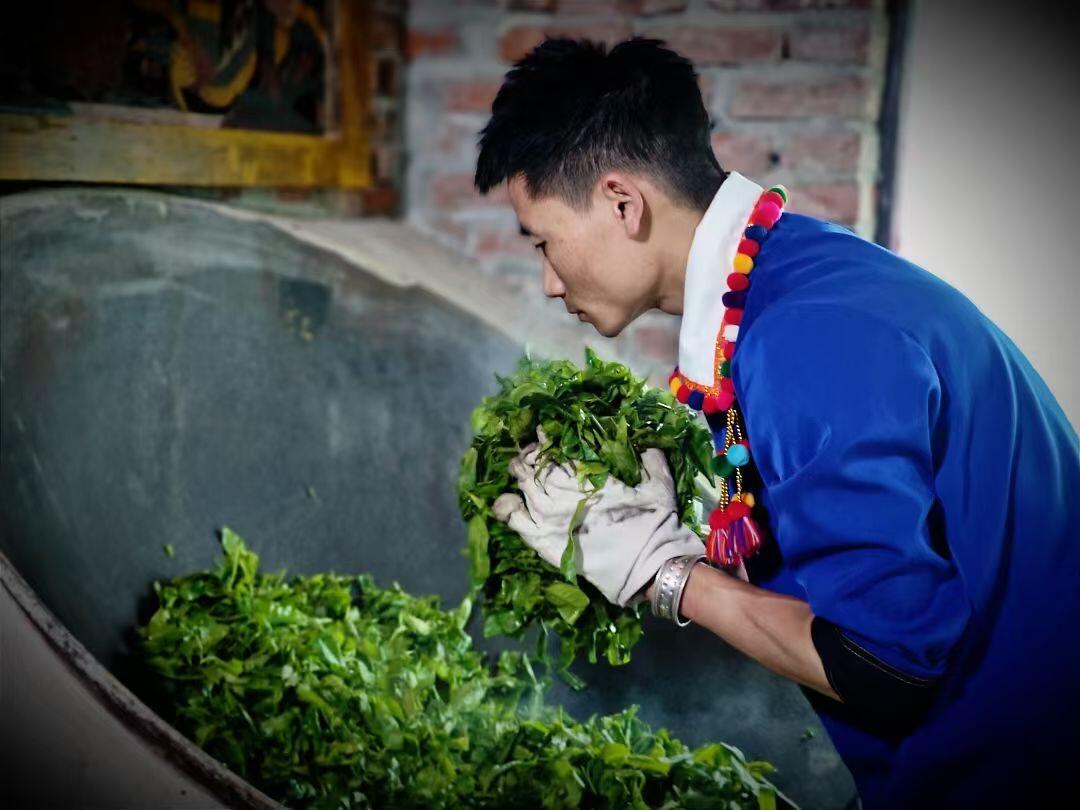
Fixed Enzyme: The fresh leaves are steamed in wooden barrels for about 20 minutes to fix the greenness.


Fermentation in Bamboo Tubes: After steaming, the tea leaves are kneaded, pressed layer by layer into fresh bamboo tubes, sealed with banana leaves, and then buried in a pit. The fermentation time varies depending on the intended use: edible tea requires about 2 months, while drinking tea requires 4 to 9 months or more.


Pounding and Drying: After fermentation, the bamboo tubes are dug out, and the tea leaves are removed. Traditionally, the tea leaves are pounded into a paste using foot-operated shovels, then pressed into cakes or flakes, and finally thoroughly dried by natural sun exposure. For the Sour Tea, there are two forms: broken tea (tea after pounding) and complete tea.


Tastes and flavor

Many people worry that "sour tea" will taste too sour, but in reality, its sourness is very mild. The dry tea has a unique, slightly sour aroma, similar to yogurt. The initial taste is a refreshing lime-like tartness, followed by honey sweetness, and a woody flavor in the middle. After drinking, a faint aroma of bamboo and refreshing tea will remain in your mouth, leaving a lingering aftertaste.
Two versions of Sour Tea
For our De'ang Sour Tea, there are two versions available: 2017-aged Sour Tea/ 2023 traditional Sour Tea (Besides the years difference, 2017 tea was fermented with a pottery jar rather than fresh bamboo; in addition, 2017 tea was crafted with pounding rather than fresh bamboo, so the tea is more broken. While 2023 tea was crafted and fermented with bamboo without a pounding process, 2017 tea presents a more intense milky fragrance similar to yogurt/cheese. 2023 tea has a fresher bamboo aroma; sweet flowery and nectar fragrance are prominent; besides, tea leaves remain complete.

2017 aged Sour Tea
Health benefits of De'ang Sour Tea
De'ang sour tea is rich in tea polyphenols and lactic acid bacteria; these not only impart a unique "sour-aromatic" flavor but also provide benefits such as clearing heat and relieving summer heat, reducing inflammation, alleviating hangovers, refreshing the mind, soothing the throat, and aiding digestion. Additionally, it helps prevent fatty liver, supports intestinal digestion, lowers blood lipids, and offers antioxidant and anti-aging properties.
Brewing guide
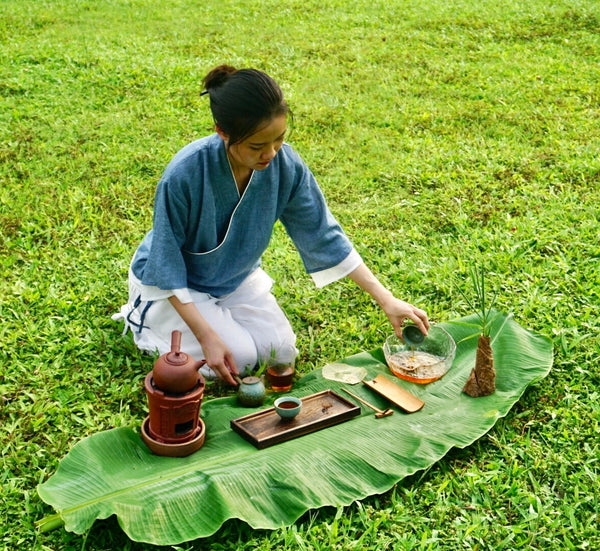
1.Gaiwan/Teapot Brewing Method
This is the most classic method, allowing you to fully appreciate the layers of flavor in the tea soup.
Adding Tea and Awakening the Tea: Place 6-8 grams of tea leaves in a gaiwan and rinse them once with boiling water. Because it's a fermented tea, wait a little longer for the first infusion, such as 30 seconds to 1 minute, until the foam on the tea leaves dissipates before discarding it.
Formal Brewing: Starting from the second infusion, pour in boiling water and steep for about 5-15 seconds. Subsequent infusions can have their steeping time gradually increased with each subsequent infusion.
2. Steeping/Steaming/Boiling Methods
These methods are suitable for office workers or those who want to enjoy their tea for a longer time. They are simple to operate and result in a richer, more mellow tea.
Stewing Method: Perfect for office workers. Place 3-6 grams of tea leaves in a thermos or slow cooker, add boiling water, and steep for 20-30 minutes. This tea can withstand long steeping; the longer it steeps, the richer the flavor may become. You can refill the thermos and enjoy it throughout the day.
Steaming Method: Pour water into a tea steamer. Once the water boils, place about 20 grams of tea leaves in the inner container. Steam for 3-15 minutes before drinking. The steamed tea has a richer, creamier flavor and a smoother texture.
P.S Can you please provide me with your phone number when you place the order, it’s important for delivering the package, thank you in advance :)